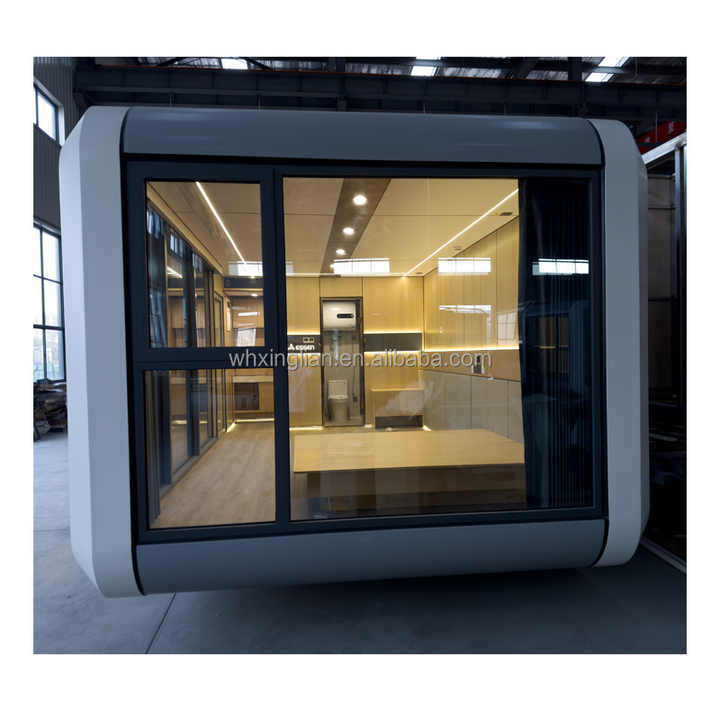

Advanced Features
Modular Scalability
Interlocking units that can be combined to create larger habitats, labs, or workspaces.
Plug-and-play compatibility for quick assembly/disassembly.
Customizable layouts (e.g., living quarters, research labs, storage).
High-Tech Materials
Lightweight, aerospace-grade alloys (e.g., carbon fiber composites) for durability and portability.
Thermal insulation for extreme temperatures (-50 °C to 120 °C).
Radiation shielding (if designed for space/radiation-prone environments).
Smart Systems Integration
IoT-enabled sensors for real-time monitoring of air quality, temperature, and structural integrity.
Energy-efficient solar panels or wireless power systems (e.g., inductive charging).
AI-driven climate control and emergency response protocols.
Space-Ready Design
Hermetic sealing for airlock functionality.
Microgravity adaptability (if intended for orbital use).
Compact storage solutions (foldable furniture, retractable equipment).
Sustainability
Closed-loop water recycling and waste management systems.
Renewable energy compatibility (solar/wind).
Advantages
Cost-Effective Deployment
Reduced construction time and labor costs due to prefabricated modules.
Reusable components for multiple missions or relocations.
Versatility
Suitable for extreme environments (Antarctica, deserts, space).
Applications in disaster relief, tourism, research, or military operations.
Durability
Corrosion-resistant materials for longevity in harsh conditions.
Compliance with international safety standards (e.g., ISO, CE).
Portability
Compact design for easy transport via air, sea, or land.
Rapid deployment (hours vs. traditional construction).
Future-Proofing
Upgradable tech slots for evolving software/hardware needs.
User Experience
Ease of Use: Intuitive touchscreen controls for environmental systems (lighting, oxygen levels).
Comfort: Ergonomic interiors with adjustable lighting and noise-canceling walls.
Safety: Automated alerts for leaks, pressure drops, or system failures.
Case Study Example:
A research team in Antarctica reported a 40% efficiency boost using the Starlink Capsule for fieldwork, citing its seamless assembly and reliable energy systems during polar winters.
Potential Applications
Space Exploration: Temporary habitats for lunar/Mars missions.
Terrestrial Use: Eco-tourism lodges, emergency shelters, mobile labs.
Commercial: Pop-up offices, luxury camping (glamping) units.
Key Considerations
Confirm whether the product is designed for terrestrial or space use (this drastically impacts cost and specs).
Check certifications for safety and environmental compliance.
Inquire about after-sales support (maintenance, customization).
For precise details, contact the Alibaba supplier to request technical datasheets, demos, or client testimonials. Let me know if you require help drafting specific questions! 🚀
